
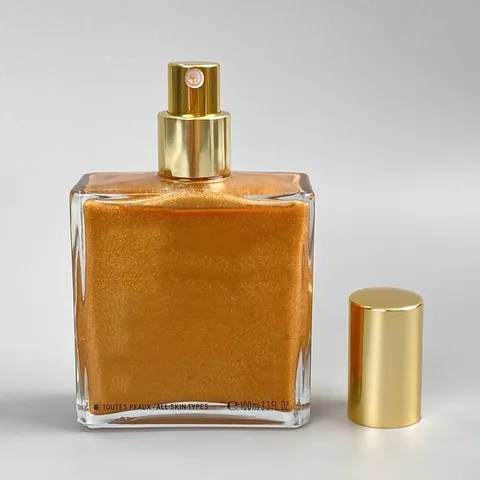
Launching an indie color cosmetic or hybrid body-care brand historically stalled at the compounding gate. When a formulation calls for multi-refractive pearlescent pigments suspended in an anhydrous lipid carrier, conventional contract manufacturers demand minimum batch volumes that require founders to commit $18,000 to $35,000 upfront before validating consumer traction. For digital creators, estheticians, and independent brand founders, this legacy structure forces capital into unsold stock rather than customer acquisition and influencer seeding.
In modern cosmetics compounding, agile flexible manufacturing removes this bottleneck. Formulating and filling a high-grade, shelf-stable suspension body shimmer oil is now commercially viable at batch sizes as low as 100 to 300 pieces per shade, allowing founders to launch a custom luxury body care line for under $2,500 total startup capital.
Achieving commercial viability at this scale requires mastering the intersection of suspension rheology, leak-free dispensing mechanisms, transparent unit economics, and FDA MoCRA regulatory compliance.
1. The $2,500 Launch Budget: Unit Economics Breakdown (100 pcs vs. 1,000 pcs)
The primary reason conventional factories decline sub-1,000 piece production runs is clean-in-place (CIP) changeover cost: sanitizing a 500 kg stainless steel compounding tank consumes identical labor and solvent whether running 100 units or 5,000 units. Agile compounding solves this by utilizing dedicated 20 kg to 50 kg pneumatic dispersion reactors calibrated for rapid shade changeovers.
The financial model below illustrates the exact startup unit cost architecture for an indie brand launching a single 100 ml hero shimmer body oil:
| Cost Component | 100 pcs Pilot Run (Unit Cost) | 1,000 pcs Scale Run (Unit Cost) | Cost Optimization Lever & Engineering Specification |
|---|---|---|---|
| Bulk Anhydrous Formulation (100ml) | $2.85 | $1.95 | Caprylic/Capric Triglyceride base, Isoamyl Laurate dry-ester, Silica Dimethyl Silylate suspension matrix, pharmaceutical Synthetic Fluorphlogopite ($D_{50} = 32,\mu\text{m}$). |
| Glass Bottle & Dispenser Pump | $1.65 | $0.92 | 100ml heavy-base flint glass cylinder with 24/410 anodized aluminum treatment pump ($200,\mu\text{L}$ dose) or precision NBR pipette dropper. |
| Secondary Unit Box & Labeling | $0.85 | $0.38 | Soft-touch coated folding carton with foil stamping (digital short-run printing for 100 pcs pilot batch). |
| Batch Analytical COA & Heavy Metal Screening | $1.15 | $0.15 | Amortized Agilent 7800 ICP-MS analytical testing verifying trace metal purity per lot. |
| DDP Air Courier Shipping (Shenzhen to USA Door) | $2.50 | $1.40 | DDP express air door-to-door with customs clearance included (5–7 day transit). |
| Total Landed Unit Cost (DDP) | $9.00 / unit | $4.80 / unit | Fully packaged, sealed, and ready for warehouse distribution. |
| Recommended Retail Price (MSRP) | $38.00 / unit | $38.00 / unit | Aligned with mid-to-prestige indie clean body glow benchmarks (e.g., Fenty, Patrick Ta, Sol de Janeiro). |
| Gross Profit Margin | 76.3% ($29.00 / unit) | 87.4% ($33.20 / unit) | Robust gross margins accommodate affiliate commissions and paid customer acquisition. |
On an initial pilot run of 100 pieces, an upfront inventory capital allocation of $900, paired with $350 for rapid custom lab sampling (100% credited against the bulk order) and $1,200 for initial product photography and creator seeding, establishes an active, revenue-generating commercial cosmetic line for under $2,500 total cash outlay.
2. Suspension Physics: Preventing Gravitational Settling (Stokes’ Law in Practice)
The primary failure mode in uncalibrated private label body oils is irreversible pigment agglomeration: pearlescent platelets settle into a dense, cement-like cake at the bottom of the bottle within 72 hours of shipping. Once hard-pan sedimentation occurs, hand agitation cannot redisperse the platelets evenly, resulting in patchy, streaky skin application and clogged pump dip tubes.
Preventing gravitational settling without turning the liquid oil into a heavy, greasy balm is governed by Stokes’ Law of sedimentation velocity:
$$v = \frac{2 r^2 (\rho_p - \rho_f) g}{9 \mu}$$
Where:
- $v$ is the sedimentation velocity of the pearlescent platelets ($\text{m/s}$),
- $r$ is the hydrodynamic radius of the pigment platelet ($D_{50} = 32,\mu\text{m}$, $r \approx 16,\mu\text{m}$),
- $\rho_p$ is the density of the synthetic fluorphlogopite particle ($\approx 2.85,\text{g/cm}^3$),
- $\rho_f$ is the carrier lipid phase density ($\approx 0.88\text{–}0.91,\text{g/cm}^3$),
- $g$ is the acceleration of gravity ($9.81,\text{m/s}^2$),
- $\mu$ is the dynamic fluid viscosity ($\text{Pa}\cdot\text{s}$).
Because the density differential $(\rho_p - \rho_f \approx 1.95,\text{g/cm}^3)$ is positive, optical platelets naturally sink in ungelled plant oils (such as jojoba or sweet almond oil, whose dynamic viscosity is a low $30\text{–}50,\text{mPa}\cdot\text{s}$).
[Resting State on Retail Shelf]
   Anton Paar MCR 302: Measured Yield Stress τ0 ≥ 1.40 Pa
   ├── Polymeric 3D Hydrogen-Bonded Scaffold Intact
   └── Platelet Gravitational Velocity v = 0 (Zero Hard-Pan Settling)
          │
          ▼ [Mechanical Pump Actuation / Skin Friction]
[Dynamic Dispensing State]
   Viscosity Drops (>95% Instant Shear-Thinning)
   ├── Brookfield RVT: 1,800 mPa·s drops to < 65 mPa·s
   └── Uniform, Non-Greasy Radiance Layer Dries in 20 Seconds
The Thixotropic Yield Stress Solution
To achieve zero gravitational separation across a 24-month shelf life while maintaining a watery, non-sticky skin glide, the formulation requires an engineered thixotropic yield stress matrix:
- Rheological Gelling Core: Incorporating 1.8 wt% to 3.0 wt% of hydrophobic Silica Dimethyl Silylate paired with Dextrin Palmitate creates a reversible three-dimensional hydrogen-bonded polymer scaffold.
- Anton Paar Yield Stress Benchmark: Validated on an Anton Paar MCR 302 rotational rheometer, the formulation maintains a resting yield stress threshold ($\tau_0 \ge 1.40\text{ Pa}$). Because the downward gravitational force exerted by a single $32,\mu\text{m}$ fluorphlogopite platelet is significantly lower than $\tau_0$, the sedimentation velocity drops to absolute zero ($v = 0$).
- Brookfield Viscosity Profile: Measured on a Brookfield RVT viscometer (Spindle #2, 20 rpm at 25°C), resting viscosity stands at $1,800\text{–}2,200,\text{mPa}\cdot\text{s}$. The moment the buyer depresses the dispenser pump or smooths the oil onto skin, shear stress exceeds $\tau_0$, immediately dropping viscosity to under $65,\text{mPa}\cdot\text{s}$ for a featherweight dry-touch finish that dries down in 20 seconds without staining clothing.
3. Raw Material Engineering: Synthetic Fluorphlogopite vs. Natural Mica
Selecting the correct pigment substrate determines both aesthetic luminosity and regulatory safety:
| Characteristic | Synthetic Fluorphlogopite (INCI: Synthetic Fluorphlogopite) | Natural Mined Mica (INCI: Mica) | Engineering & Commercial Advantage |
|---|---|---|---|
| Optical Refractive Index ($n$) | $n = 1.62\text{–}1.68$ | $n = 1.56\text{–}1.59$ | Synthetic fluorphlogopite delivers significantly higher light reflectance and optical purity at lower concentration levels. |
| Particle Size Distribution (PSD) | Laser diffraction (Malvern Mastersizer 3000): $D_{10} = 12,\mu\text{m}$, $D_{50} = 32,\mu\text{m}$, $D_{90} = 58,\mu\text{m}$ | Wide particle variance, frequent oversize flakes ($> 120,\mu\text{m}$) | Controlled narrow distribution prevents nozzle clogging in treatment pumps. |
| Surface Smoothness & Skin Feel | Atomically smooth synthesized crystal platelets | Jagged, fractured cleavage planes | Silky skin feel with zero abrasive scratchiness on delicate décolletage. |
| Trace Impurities (ICP-MS) | Lead ($\text{Pb}$) $< 1,\text{ppm}$, Arsenic ($\text{As}$) $< 0.2,\text{ppm}$, Antimony ($\text{Sb}$) $< 0.5,\text{ppm}$ | Variable natural mineral background | Facilitates compliance with California Prop 65 safe harbor assessments and global limits. |
| Ethical Sourcing Profile | 100% lab-synthesized mineral origin | Subject to supply-chain child labor scrutiny in artisanal mining regions | Full supply chain transparency for clean beauty marketing narratives. |
4. Packaging Mechanics: Treatment Pump vs. Pipette Dropper
Indie founders must evaluate packaging through fluid mechanics rather than cosmetic appearance alone:
Option A: Anodized Treatment Pumps (Engineered for Low Returns)
- Dispensing Control: Internal metering chamber delivers a precise $180\text{–}220,\mu\text{L}$ aliquot per stroke, preventing consumer over-application.
- Fluid Compatibility: Fluoroelastomer or nitrile internal valve seats prevent volatile ester swelling. A mechanical twist-lock or snap-on overcap eliminates transit leakage during domestic shipping.
- Viscosity Tolerance: Smoothly dispenses formulations from $300$ to $2,500,\text{mPa}\cdot\text{s}$ without cavitation or nozzle sputtering.
Option B: Pipette Droppers (Luxury Ritual Aesthetics)
- Fluid Mechanics Requirement: Requires precision viscosity tuning ($600\text{–}1,200,\text{mPa}\cdot\text{s}$). Formulations below $400,\text{mPa}\cdot\text{s}$ drip uncontrollably during extraction, while formulations above $1,500,\text{mPa}\cdot\text{s}$ exceed the suction pressure of the rubber bulb.
- Elastomer Degradation Risk: Standard latex and natural rubber bulbs swell and soften upon continuous exposure to lipid carriers and ester solvents. For dropper packaging, our engineering desk strictly specifies solvent-resistant Nitrile Butadiene Rubber (NBR) or Fluorosilicone bulb assemblies.
5. U.S. MoCRA & Global Compliance Blueprint
Distributing cosmetic products in the United States and international markets requires strict adherence to statutory regulatory requirements:
Statutory Regulatory Notice Regarding FDA Oversight
IMPORTANT REGULATORY NOTICE: Under the U.S. Federal Food, Drug, and Cosmetic Act (FD&C Act) and the Modernization of Cosmetics Regulation Act of 2022 (MoCRA), the U.S. Food and Drug Administration (FDA) does not certify, approve, or issue compliance endorsements for cosmetic manufacturing facilities or finished cosmetic formulas. Any contract manufacturer claiming to offer “FDA-approved cosmetic formulas or facilities” is misrepresenting federal statutory law. Compliance is demonstrated through mandatory facility registration, product listing, and rigorous safety substantiation dossiers maintained by the brand.
Core MoCRA Requirements for Indie Brands
- Facility Registration & Product Listing (MoCRA Section 607):
- Your contract manufacturing partner must maintain an active FDA Cosmetic Facility Registration.
- For every commercial SKU, the brand owner (or designated U.S. Agent) must complete FDA product listing through the FDA Cosmetics Direct portal, submitting exact INCI ingredient listings, applicable fragrance allergen disclosures, and designated color additive batch certifications.
- Safety Substantiation Dossier (MoCRA Section 608):
- The brand owner must maintain documented technical evidence confirming that each ingredient and the finished cosmetic product are safe under intended conditions of use.
- For body shimmer oils, our engineering desk provides turnkey microbial challenge test data (USP <61>/<62> protocols documenting zero pathogenic growth) and 3-cycle freeze-thaw thermal stability reports ($-10^\circ\text{C}$ to $+45^\circ\text{C}$).
- Trace Heavy Metal Screening (Agilent 7800 ICP-MS):
- To support clean retailer onboarding (e.g., Sephora Clean, Credo) and enable qualified toxicologists to conduct California Proposition 65 safe harbor exposure evaluations, production lots undergo microwave-assisted acid digestion (EPA 3052) testing on an Agilent 7800 ICP-MS, with batch Certificates of Analysis (COA) provided upon release:
- Lead ($\text{Pb}$): $< 1.0,\text{ppm}$
- Arsenic ($\text{As}$): $< 0.5,\text{ppm}$
- Cadmium ($\text{Cd}$): $< 0.3,\text{ppm}$
- Mercury ($\text{Hg}$): $< 0.1,\text{ppm}$
- To support clean retailer onboarding (e.g., Sephora Clean, Credo) and enable qualified toxicologists to conduct California Proposition 65 safe harbor exposure evaluations, production lots undergo microwave-assisted acid digestion (EPA 3052) testing on an Agilent 7800 ICP-MS, with batch Certificates of Analysis (COA) provided upon release:
6. 30-Day Manufacturing Execution Roadmap
flowchart LR
    Step1["Days 1–3: Briefing<br>(Viscosity, Scent, Shade Palette)"] --> Step2["Days 4–7: Prototyping<br>(3 Custom Lab Samples Dispatched)"]
    Step2 --> Step3["Days 8–14: Client Wear Testing<br>(Skin Feel, Stability, Sign-Off)"]
    Step3 --> Step4["Days 15–24: Batch Filling<br>(100-300 pcs Controlled Filling)"]
Step4 --> Step5["Days 25–30: DDP Air Transit<br>(Delivered to USA Door / 3PL)"]- Phase 1: Formulation Briefing & Prototyping (Days 1–7): Define target skin-tone swatches (Champagne Glow, Radiant Bronze, Solar Gold), lipid absorption speed, and bespoke fragrance profile (vanilla amber, tropical coconut, or fragrance-free). The lab compounds 3 bespoke prototype variations and dispatches them via express air courier within 3 to 7 business days. The $350 prototyping fee is credited 100% against your bulk production invoice.
- Phase 2: Wear Testing & Master Sample Sign-Off (Days 8–14): Evaluate prototypes on skin for flash dry-down time, non-greasy absorption, and clothing transfer resistance. Founder signs off on the Master Golden Sample, locking the bill of materials (BOM).
- Phase 3: Controlled Batch Compounding & Filling (Days 15–24): Bulk blending takes place in temperature-controlled pneumatic dispersion vessels. Anhydrous base lipids are vacuum-degassed to eliminate micro-bubbles. Synthetic fluorphlogopite platelets are introduced under low-shear paddle agitation to preserve crystal morphology. Products are filled using calibrated piston depositors, torque-sealed, and packaged into secondary unit cartons.
- Phase 4: Analytical QA Release & DDP Air Delivery (Days 25–30): Finished lots clear quality release testing: Brookfield RVT viscosity confirmation, specific gravity verification, and Agilent ICP-MS heavy metal screening. Cases are consolidated and dispatched via DDP Air Express, clearing customs and delivering directly to your domestic warehouse or 3PL within 5 to 7 days.
Frequently Asked Questions (FAQ)
What is the total startup budget required to launch an indie body shimmer oil line?
A founder can comfortably launch with a total working capital allocation of $2,000 to $2,500. This covers a 100-piece pilot run of custom-formulated shimmer body oil at ~$9.00 landed cost per unit, express lab prototype development ($350, credited 100% against the bulk production order), and initial e-commerce launch operations.
How does the formulation prevent mica platelets from packing into a hard cake?
We engineer a thixotropic suspension network utilizing hydrophobic Silica Dimethyl Silylate combined with Dextrin Palmitate. Validated on an Anton Paar MCR 302 rheometer, the matrix establishes a resting yield stress ($\tau_0 \ge 1.40\text{ Pa}$) that prevents gravitational settling (Stokes’ Law sedimentation velocity $v = 0$). When pumped or applied to skin, mechanical shear breaks the network down to $< 65,\text{mPa}\cdot\text{s}$ for a silky, non-sticky glide.
Does the FDA approve private label cosmetic manufacturers or formulas?
No. The U.S. FDA does not issue approvals, certifications, or compliance endorsements for cosmetic production facilities or formulas. Under MoCRA, facilities must complete FDA registration (Section 607), and brands must submit product listings and maintain technical safety substantiation files (Section 608). Any supplier claiming “FDA-approved cosmetic formulas” is misrepresenting federal regulations.
Can our brand supply proprietary glass containers or custom fragrances?
Yes. While MLM Glitter provides full turnkey contract manufacturing (bulk liquid, glass bottles, dispenser pumps, and unit cartons), we routinely accommodate hybrid supply models. Founders can ship custom-molded glass bottles, specialty closures, or custom fragrance oils directly to our Shenzhen facility for bulk compounding, filling, induction sealing, and packaging assembly.
How does the bespoke lab sampling credit work?
Our bespoke prototype fee is $350, covering 3 custom-formulated variations in tailored shades, scent loads, and viscosity targets, dispatched via expedited air courier. Upon client approval of the Master Golden Sample and placement of a commercial production order of 100 or more units, 100% of this $350 fee is deducted directly from your final production invoice.
Request Your 3-Piece Indie Brand Turnkey Lab Sample Kit
Ready to launch your custom body shimmer line? Request our 2026 Indie Brand Fast-Launch Formulation Kit featuring 3 pre-stabilized suspension swatches (Champagne Glow, Deep Bronzing, and Holographic Solar) paired with complete MoCRA analytical dossiers. Connect with our engineering team below to formulate your hero product.